Taking the first step to engage with an NDIS provider can feel like a monumental task. It’s a moment filled with questions, uncertainties, and perhaps a degree of apprehension. You’ve navigated the complexities of the NDIS, you’ve spent hours researching your options, and now you’re standing at the threshold, wondering: What happens next? What will it be like? Will they understand me?
At Lanara, we recognise the courage it takes to make that first call or send that first email. We understand that you’re not just looking for a service; you’re searching for a partner, a guide, and a team you can trust. That’s why we’ve made our engagement process as transparent, welcoming, and person-centered as our support itself.
We believe that your journey with us should begin just as it will continue: with a focus on you. From the very first conversation, our goal is to listen, to understand, and to build a relationship founded on respect and collaboration. As a family-owned provider in Sydney, with a unique team of psychology-trained support workers, we have designed our process to be more than just an intake; it’s an introduction to a new kind of support relationship. This guide is our way of pulling back the curtain and showing you exactly what to expect when you partner with Lanara. We want to demystify the process, answer your questions before you even have to ask them, and give you the confidence to take that next, important step. This is your guide to your NDIS support journey with us.
Step 1: The Initial Conversation – A No-Pressure Introduction
Reaching out for support should never feel like a high-pressure sales call. When you contact Lanara, you won’t be met with a script or a hard sell. You’ll be met with a listening ear. Our initial conversation, whether by phone or email, is simply that – a conversation. It’s a relaxed, no-obligation opportunity for us to get to know each other.
Our primary goal in this first step is to listen. We want to hear your story, in your own words. What are you looking for in a provider? What are your goals, your challenges, and your hopes for the future? What has worked for you in the past, and what hasn’t? This is your time to share as much or as little as you feel comfortable with. We are here to learn about you, not to fit you into a pre-existing box. We’ll ask open-ended questions designed to help us understand your unique situation, and we’ll answer any initial questions you might have about us, our philosophy, or the NDIS in general.
You can expect this conversation to be with a senior member of our team who is deeply familiar with both the NDIS and our person-centered approach. They will be able to provide you with clear, accurate information and will be honest about whether we are the right fit for your needs. If we believe another provider might be better suited to your specific goals, we will tell you. Our commitment is to your well-being, first and foremost.
By the end of this initial conversation, our aim is for you to feel heard, respected, and informed. You will have a clear understanding of who we are, how we work, and what the next steps in the process look like. There will be no pressure to commit to anything. We want you to feel empowered to make the decision that is best for you, and we are confident that a warm, respectful, and informative first impression is the best way to begin a trusting and successful partnership.
Step 2: Understanding Your Needs – A Comprehensive Discovery Process
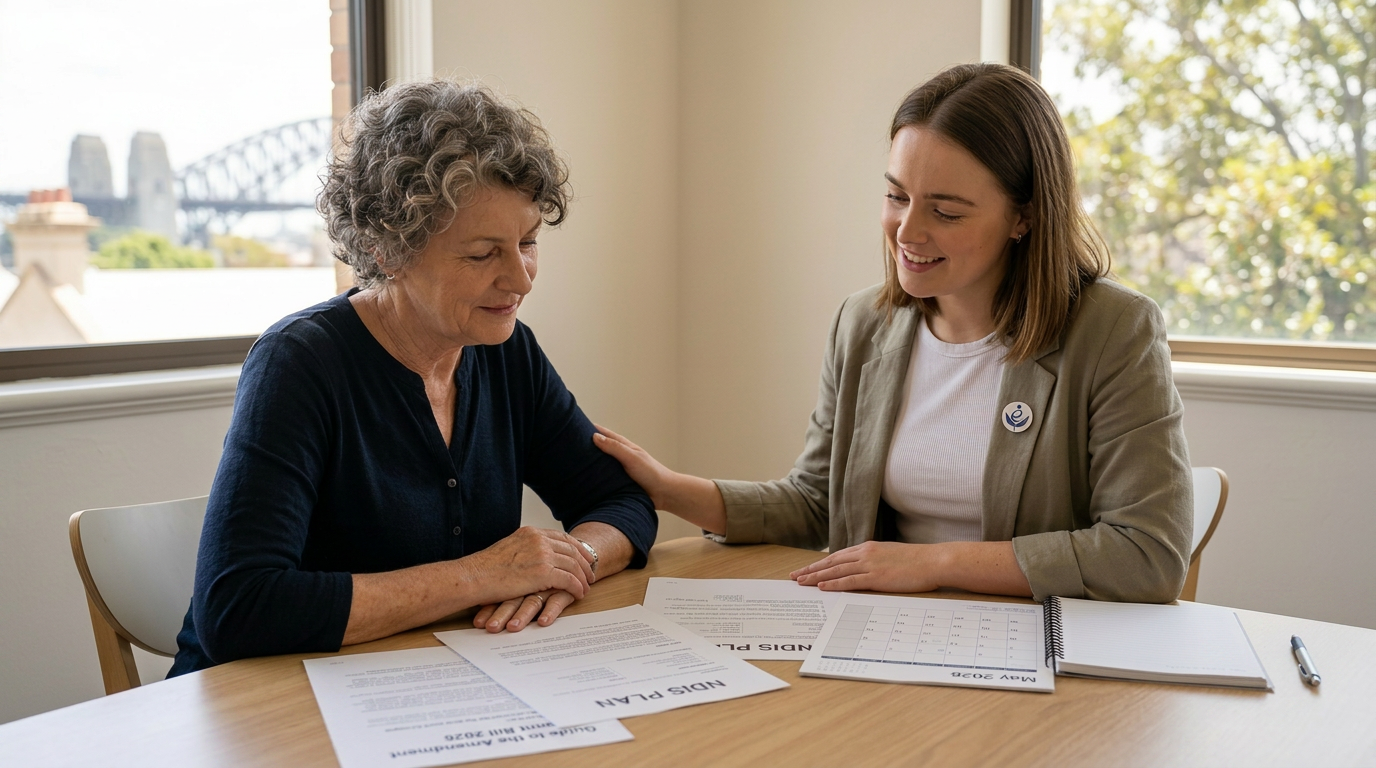
Once you decide that Lanara feels like the right fit for you, we move to a thorough discovery process where we gain a deep understanding of your individual needs, preferences, and goals. This is where we translate the conversations we’ve had into a clear, practical roadmap for your support. Your voice, your goals, and your preferences guide everything we do.
We typically arrange a dedicated meeting for this purpose, either in your home, at a location of your choice, or via video call – whatever makes you feel most comfortable. We encourage you to invite anyone you feel is part of your support network, whether it’s a family member, a friend, or your Support Coordinator. The purpose of this meeting is to dive deeper into the goals you have outlined in your NDIS plan and to understand exactly how we can best support you to achieve them.
Our team member will guide you through a structured but flexible conversation. We’ll talk about your strengths and what you enjoy doing. We’ll explore the areas where you feel you need the most support, and we’ll listen carefully to understand your preferences and priorities. For example, if your NDIS goal is to “increase your community participation,” we’ll ask you: What are you passionate about? What have you always wanted to try? Is it a pottery class, joining a walking group, or volunteering at the local animal shelter? We’ll then work backwards from there, figuring out the practical steps and the level of support you might need to make it happen.
During this stage, we will also discuss the practicalities of your support. How many hours of support do you have in your plan? What days and times work best for you? What specific tasks do you need assistance with? We will be completely transparent about how your NDIS funding can be used and will work with you to create a schedule of services that maximizes your budget and aligns with your goals.
The outcome of this step is a comprehensive understanding of your individual requirements. Our support workers will be thoroughly and comprehensively briefed on your needs, preferences, routines, and goals. They will understand not just what support you need, but how you prefer to receive it, what matters most to you, and what success looks like from your perspective. This thorough briefing ensures that from day one, your support worker arrives prepared, informed, and with an unwavering commitment to your best interests and wellbeing.
Step 3: Finding Your Perfect Match – How We Pair You with a Support Worker
At Lanara, we believe that the single most important factor in a successful support relationship is the connection between the participant and the support worker. A good match can be transformative, fostering trust, encouraging growth, and making the experience of receiving support a positive and enjoyable one. A poor match, on the other hand, can be a source of stress and frustration. That’s why we have a thoughtful, deliberate, and highly personalized matching process that goes far beyond simply checking for availability.
Our process is guided by the deep understanding of you that we gained during our initial conversations and discovery process. We don’t just look at your practical needs; we look at the whole person. We consider your personality, your interests, your communication style, and the specific goals you are working towards. We then look to our team of dedicated, psychology-trained support workers to find the individual who is not just qualified, but is the best possible fit for you on a personal level.
For example, if you are a quiet, introverted person who is working on building social confidence, we would look to match you with a support worker who has a calm, patient, and gentle demeanor. If you are an energetic person who wants to get more active in the community, we would look for a support worker who shares your enthusiasm and is proactive and encouraging. If you are working through challenges related to past trauma, we would ensure your support worker has specific experience and training in trauma-informed care.
Once we have identified a potential match, we don’t just assign them to you. We believe in your right to choose. We will provide you with a profile of the proposed support worker, outlining their qualifications, their experience, and a little bit about their personality and interests. We will then arrange a “meet and greet,” either in person or via video call. This is a no-obligation opportunity for you to chat with the support worker, ask them questions, and see if you feel a sense of rapport. It’s your chance to gauge whether this is someone you would feel comfortable welcoming into your life and your home.
Your feedback from the meet and greet is the final and most important part of the process. If you feel a positive connection, that’s wonderful, and we can proceed with scheduling your first service. If, for any reason, you don’t feel it’s the right fit, that is perfectly okay. We will listen to your feedback and begin the process again, using what we’ve learned to find an even better match. We would rather spend the extra time to get it right from the start than to rush you into a support relationship that doesn’t feel right. This commitment to finding your perfect match is a cornerstone of the Lanara Difference.
Step 4: The First 30 Days – Building a Strong Foundation
The first month of any new support relationship is a critical period. It’s a time for building trust, establishing routines, and ensuring that the support arrangements we’ve put in place are working effectively in the real world. At Lanara, we view the first 30 days as a crucial foundation-building phase. Our focus is on creating a smooth, comfortable, and positive transition for you and your new support worker.
During the first few services, your support worker’s priority will be to get to know you and your routines. They arrive already comprehensively briefed on your needs and preferences, and they will use this knowledge to provide support that feels natural and personalized from the start. They will also be flexible and responsive to your needs on the day. This is a period of learning for both of you. They will be learning your preferences – how you like your coffee, the route you prefer to take to the shops, the time of day you have the most energy. You will be learning their communication style and getting comfortable with having them in your space.
Open communication is key during this time. We encourage you to provide feedback to your support worker. If there’s something you’d like them to do differently, please tell them. Our support workers are trained to be receptive to feedback and to adapt their approach to meet your needs. They will also check in with you regularly to see how you are feeling about the support.
Behind the scenes, the Lanara leadership team is actively involved in ensuring a successful start. A senior team member will check in with you by phone within the first week to see how things are going. They will also be in regular contact with your support worker, providing them with guidance and support as they build their relationship with you. This proactive approach allows us to identify and address any small issues before they become larger problems. It’s our way of ensuring that the quality of our service remains consistently high.
Towards the end of the first 30 days, we will schedule a more formal check-in with you. This is an opportunity to review how the support is going and make any necessary adjustments. Is the schedule working for you? Are the supports we are providing helping you to move towards your goals? Is there anything we could be doing better? This initial review is an important part of our commitment to a dynamic and responsive partnership. Your needs may change, and your support should be able to change with them. By building a strong foundation of trust, communication, and collaboration in the first 30 days, we set the stage for a successful and empowering long-term support relationship.
Step 5: Ongoing Partnership – Communication, Feedback, and Reviews
Our commitment to you doesn’t end after the first 30 days. At Lanara, we view our relationship with you as a long-term partnership. Your journey is our journey, and we are dedicated to walking alongside you, providing consistent, high-quality support that evolves as your life and your goals evolve. This ongoing partnership is built on three key pillars: open communication, a culture of feedback, and regular, meaningful reviews.
Open Communication: We believe that clear, consistent, and honest communication is the lifeblood of a healthy support relationship. You will have a dedicated point of contact within our leadership team who you can reach out to at any time with questions, concerns, or feedback. We maintain regular contact with you and your support worker to ensure everything is running smoothly. We also provide regular updates on your NDIS budget, so you always know where you stand with your funding.
A Culture of Feedback: We don’t just accept feedback; we actively seek it out. We want to know what’s working well and what we could be doing better. Your perspective is invaluable, and we have created a culture where both participants and support workers feel safe and encouraged to share their thoughts. This feedback loop allows us to be a constantly learning and improving organization. It ensures that our services remain responsive to your needs and that we are always striving to provide the best possible support.
Meaningful Reviews: Your NDIS plan is not set in stone, and neither are your support arrangements with Lanara. We conduct regular reviews with you to check in on your progress towards your goals, to celebrate your achievements, and to make any necessary adjustments to your support. This is more than just a box-ticking exercise. It’s a collaborative conversation where we reassess your goals. Have you achieved what you set out to do? Are there new goals you’d like to work towards? We use these reviews to ensure your support remains relevant, effective, and aligned with your aspirations. As your NDIS plan review approaches, we will also work with you and your Support Coordinator to prepare for it, gathering the evidence and reports needed to demonstrate your progress and to advocate for the funding you need for the year ahead.
This commitment to an ongoing partnership is what sets Lanara apart. We are not a transactional service that simply provides a support worker. We are a dedicated, family-owned team that is genuinely invested in your long-term well-being and success. We are your partners, your advocates, and your guides on your NDIS journey.
Frequently Asked Questions (FAQ)
Q: What happens if my regular support worker is sick or goes on holiday?
A: We understand that consistency is crucial, and we do everything we can to ensure you have a regular, dedicated support worker. However, people do get sick or take holidays. In these instances, we have a team of equally qualified and compassionate support workers who can step in. We will always communicate with you in advance about any planned leave, and we will work with you to find a suitable replacement from within our team who you feel comfortable with. We will never send a stranger to your door unannounced.
Q: How do you handle disagreements or complaints?
A: We take all feedback, including complaints, very seriously. We have a clear and transparent process for handling any issues that may arise. Your first point of contact would be your dedicated leadership team member, who will listen to your concerns and work with you to find a resolution. We are committed to resolving any issues in a fair, respectful, and timely manner. Your trust and satisfaction are our highest priorities.
Q: How much involvement do I have in the day-to-day activities?
A: You have as much involvement as you want. Our approach is person-centered, which means you are in the driver’s seat. Your support worker will work with you, not for you. They will encourage you to be actively involved in all aspects of your support, from planning your weekly schedule to deciding how you want to approach a particular task. Our goal is to build your capacity and independence, and that starts with ensuring you have choice and control over your own life and your own support.